The Coquille
des Lignes is a piece designed to investigate the potential of the curve
when it is juxtaposed with a straight line. Its name derives from French with the meaning: “Shell of lines,” the reason for which is plain to
see as coming from the spiralling, cochleate pattern.
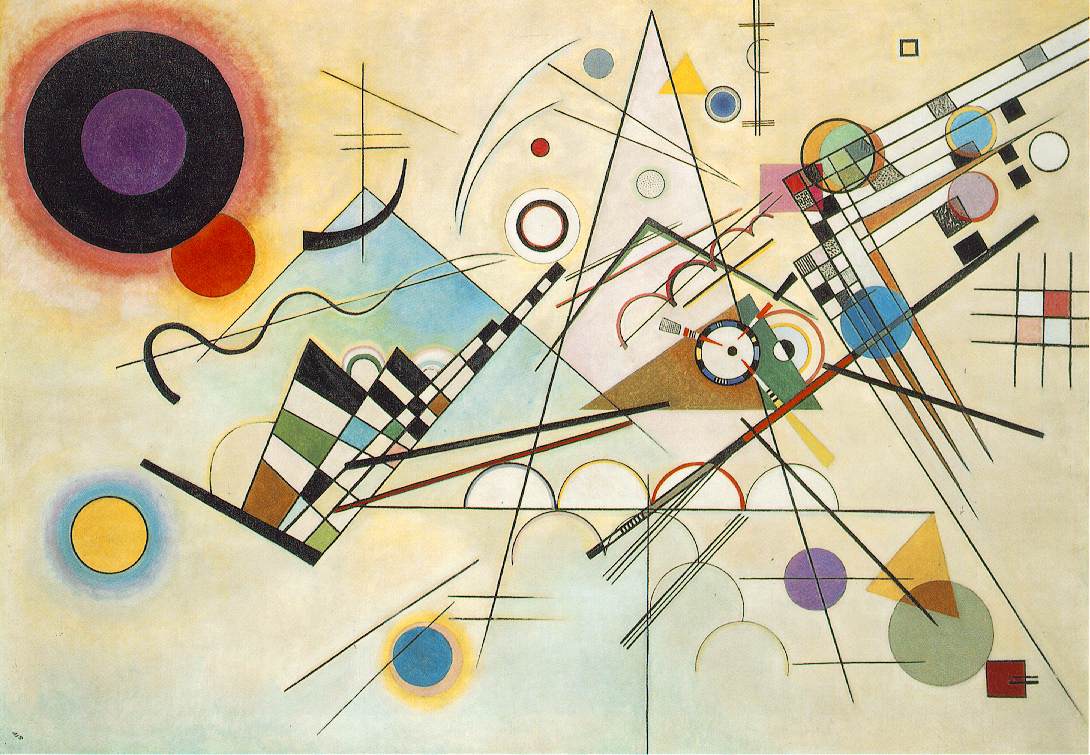 Just as Wassily Kandinsky, the abstract
artist and one of the precedents for this piece, said in his book “Concerning the Spiritual in Art”, “mastery
over form is not [the artist’s] goal but rather the adapting of form to its
inner meaning”. The Coquille des Lignes does
not attempt to dominate the natural form of the shell through imitation, but
rather is developed from inspirational aspects of the form of the shell, such
as the whorl of the helix or the overlapping parallel layers.
Just as Wassily Kandinsky, the abstract
artist and one of the precedents for this piece, said in his book “Concerning the Spiritual in Art”, “mastery
over form is not [the artist’s] goal but rather the adapting of form to its
inner meaning”. The Coquille des Lignes does
not attempt to dominate the natural form of the shell through imitation, but
rather is developed from inspirational aspects of the form of the shell, such
as the whorl of the helix or the overlapping parallel layers. Zaha Hadid, the famous architect and second
precedent for this piece, once said “there are 360 degrees, so why stick to
one?” This idea forms the basis for the Coquille
des Lignes in the straight lines protruding from the inner centre of the
piece, creating an angular piece which gives different impressions from every
position.
Zaha Hadid, the famous architect and second
precedent for this piece, once said “there are 360 degrees, so why stick to
one?” This idea forms the basis for the Coquille
des Lignes in the straight lines protruding from the inner centre of the
piece, creating an angular piece which gives different impressions from every
position.
The union of both the straight line and the
curve creates a textural effect of which many parallels can be drawn to nature.
This ideal makes for an interesting sculpture which appeals to both the human
yearning for curves and also for order displayed in the Coquille des Lignes.
Hadid, Z. (2003, February Monday 3).
The Guardian, Master Builder. (S.
Hattenstone, Interviewer
Kandinsky, W. (1914). Concerning the Spiritual in Art.
New York: Dover Publications.

No comments:
Post a Comment